
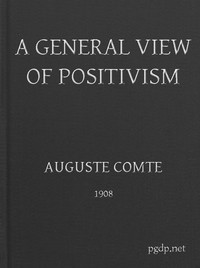
A General View of Positivism by Auguste Comte
The Story
Auguste Comte had a simple goal: end global chaos with an idea. The real story of A General View of Positivism is Comte’s attempt to lay out a blueprint for society based on proven facts—not myths or guesses. He argued that the human mind goes through three stages: first, we blame gods for thunderstorms (theological); then we argue about abstract principles like freedom or justice (metaphysical); but finally—and here’s his big dream—we reach a scientific stage called Positivism, where we actually observe what works and what doesn’t. It sounds like a nerdy manifesto, but Comte was audacious enough to base a whole system of morals, politics, and education on this idea. He wrote this book to be a starter pack for the coming Age of Science. Think of it as a Dad talking to his family at dinner: “Look, if humans just stopped fighting and studied how to cooperate, everything would be fine!” Oh, but there’s a twist... he later wanted to formalize all of this into a new religion (complete with saints and a Pope, guess who). This book is one of those “interesting-at- parties” works that tiptoes between pop-science prophecy and cult pamphlet.
Why You Should Read It
I’m not going to lie to you: this book gets weird once Comte talks about his dream religion. But ignore that part for a second, and this is a surprisingly human read. Comte’s passion is contagious—you can feel his frustration with how humans constantly repeat the same mistakes. His call for sociologists to be as respected as physicists still hits home today, when we often value tech innovation over understanding why people hurt each other. I loved the cheesy optimism in it; Comte genuinely believed evidence could make us kinder. He has these lovely, accidentally modern rants against racism, sexism, and war, which he called unscientific waste of energy. However, be ready for moments you’ll disagree. Comte slides into total control at some parts—his ideal government sounds suspiciously like a science dictatorship run by, well, him. It’s both an exciting historical time capsule and a cautionary tale about putting too much trust in ANY single philosophy.
Final Verdict
This book exists to haunt and inspire anyone who dreams of solving the world. It’s perfect for fiction readers drawn to thinkers like Victor Hugo or—if we’re honest—anyone who loved Dune’s idea of a science/mysticism fusion. If you read it as a podcast transcript from a wild ancestor of science talk-shows, you’ll enjoy it a lot more than reading it for raw logic. Recommended for weird-history nerds, PoliSci students, and anyone who needs a great example to argue at a dinner party: “At least I’m not trying to build a state religion around sociology… yet.” It’s philosophical marmite: half-brilliant vision, half-bonkers scheme, and always, always interesting company.
Legal analysis indicates this work is in the public domain. It is available for public use and education.
Nancy Williams
9 months agoHaving followed this topic for years, I can say that the quality of the diagrams and illustrations (if applicable) is top-notch. It’s a comprehensive resource that doesn't feel bloated.
David Martinez
3 months agoI was skeptical about the depth of this book at first, but the way it challenges the status quo is both daring and well-supported. If you want to master this topic, start right here.







James Johnson
3 months agoThis digital copy caught my eye due to its reputation, the formatting on mobile devices is surprisingly crisp and clear. A solid investment for anyone's personal development.